
Digital Transformation Law: How to Prepare for the Regulatory Future in the DR?
Learn how the digital transformation law and DGII electronic invoicing impact your business in the DR and how to automate your compliance with AA High Tech.
Digital Transformation Law: How to Prepare for the Regulatory Future in the DR?
As the business landscape in the Dominican Republic evolves, the concept of a digital transformation law has moved from a theoretical discussion to a practical necessity. For growing companies, the regulatory environment is no longer just about taxes; it is about the integration of technology into the very fabric of operations. Understanding how to navigate these changes is critical for any business leader aiming to scale without falling into operational chaos.
Understanding the Digital Transformation Law and Its Impact
What is the digital transformation law in the context of the Dominican Republic? It represents the government's push toward a paperless, transparent, and highly efficient economy. This shift is most visible through the mandatory implementation of the DGII electronic invoicing system, also known as e-CF (Comprobante Fiscal Electrónico).
For many, this transition feels like a burden. However, when approached correctly, it is the catalyst for true operational maturity. If you are wondering where to start, our guide on Transformación Digital en República Dominicana: Por Dónde Empezar sin Caos provides a roadmap for this journey.
The Core of Compliance: DGII Electronic Invoicing (e-CF)
Compliance with the DGII is not merely a legal requirement; it is a technical challenge. The e-CF Dominican Republic standards require businesses to have robust systems capable of real-time communication with tax authorities.
Why Manual Processes Fail
If your team is still manually digitizing invoices, you are losing time and increasing the risk of human error. Our article on Cómo automatizar la captura de facturas de proveedores con inteligencia artificial explains how to eliminate this bottleneck using modern technology.The Role of ERP Software
An ERP software is the backbone of any compliant organization. It centralizes your sales, inventory, and accounting, ensuring that every transaction is automatically formatted for e-CF compliance. To learn more about how this centralizes your business, read Escalabilidad sin caos: Cómo un sistema ERP centraliza tus operaciones.Automating for Growth: Beyond Compliance
While the digital transformation law focuses on compliance, the real value lies in process automation. When you automate your workflows, you don't just satisfy the DGII; you gain insights into your business performance.
How AA High Tech Can Help
At AA High Tech, we specialize in designing technological ecosystems that allow you to comply with the law while scaling your operations. Whether you need to implement an ERP, automate your invoicing, or deploy AI agents, we provide the expertise of an internal IT team at a fraction of the cost.
Don't wait for the next regulatory deadline to catch you off guard. Prepare your business today.
Frequently Asked Questions
Q: What is the primary goal of the digital transformation law in the DR?
A: The primary goal is to modernize the economy by mandating digital processes, specifically electronic invoicing, to increase transparency and operational efficiency.Q: Is e-CF mandatory for all companies?
A: The DGII has established a phased rollout for e-CF. It is essential to verify your specific sector's requirements to ensure timely compliance.Q: How does an ERP help with DGII compliance?
A: An ERP automates the generation, signing, and transmission of e-CFs directly to the DGII, eliminating manual data entry and reducing compliance errors.Q: Can I automate my accounting processes with AI?
A: Yes, AI can now capture, categorize, and process supplier invoices automatically, significantly reducing the workload on your accounting team.Q: What is the first step toward digital transformation?
A: The first step is auditing your current processes to identify bottlenecks. Read our guide on Cómo diseñar una estrategia de transformación digital para tu negocio en RD to get started.Preguntas Frecuentes
The primary goal is to modernize the economy by mandating digital processes, specifically electronic invoicing, to increase transparency and operational efficiency.
The DGII has established a phased rollout for e-CF. It is essential to verify your specific sector's requirements to ensure timely compliance.
An ERP automates the generation, signing, and transmission of e-CFs directly to the DGII, eliminating manual data entry and reducing compliance errors.
Yes, AI can now capture, categorize, and process supplier invoices automatically, significantly reducing the workload on your accounting team.
The first step is auditing your current processes to identify bottlenecks and choosing the right technology partner to implement scalable solutions.
Schedule your consultation
Comenzar AhoraArtículos Relacionados
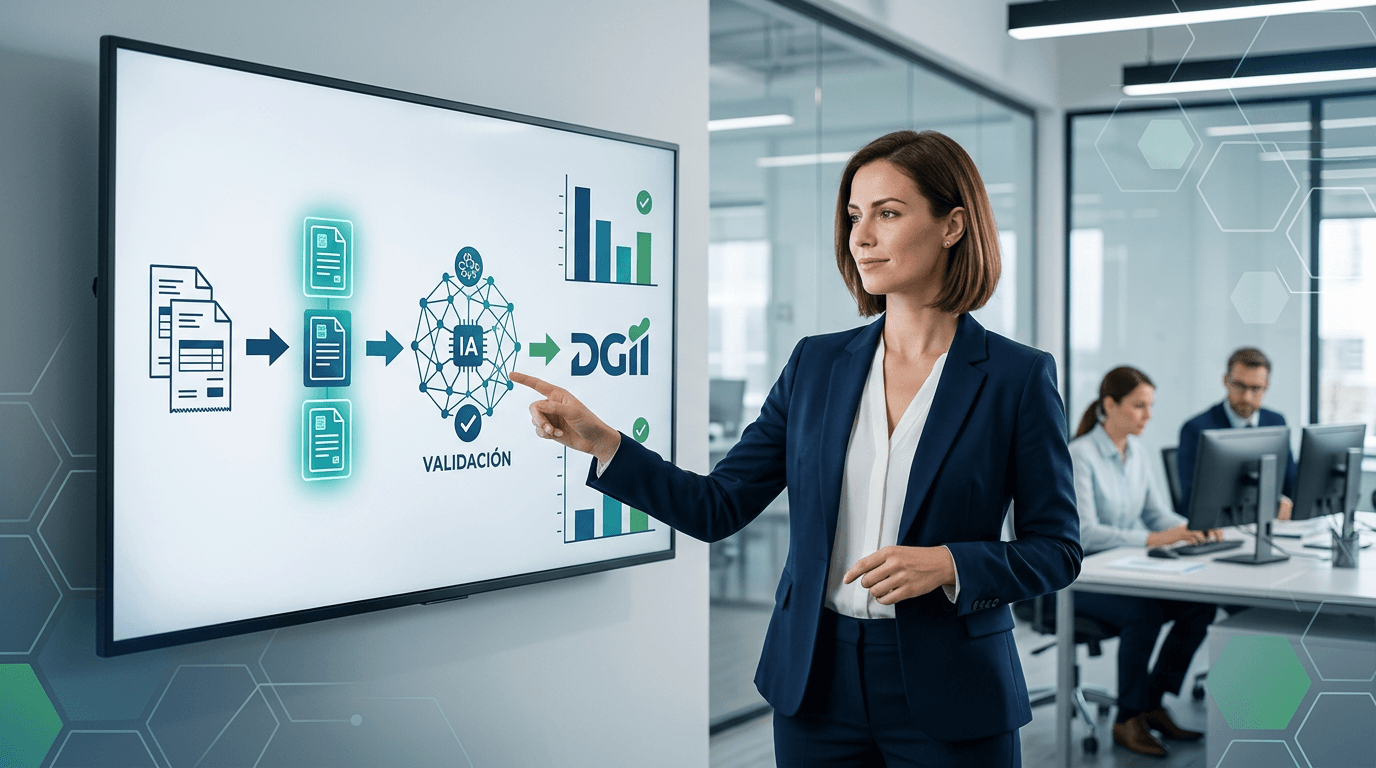
Cómo automatizar facturas de proveedores con IA y evitar errores con la DGII
Descubre cómo automatizar facturas de proveedores con Inteligencia Artificial. Reduce errores de NCF, elimina la digitación manual y agiliza tu ERP.

Escalabilidad sin caos: Cómo un sistema ERP centraliza tus operaciones
Descubre qué es un ERP, cómo centraliza tus operaciones y por qué es la clave para escalar tu negocio sin caos. Optimiza tu empresa con AA High Tech.
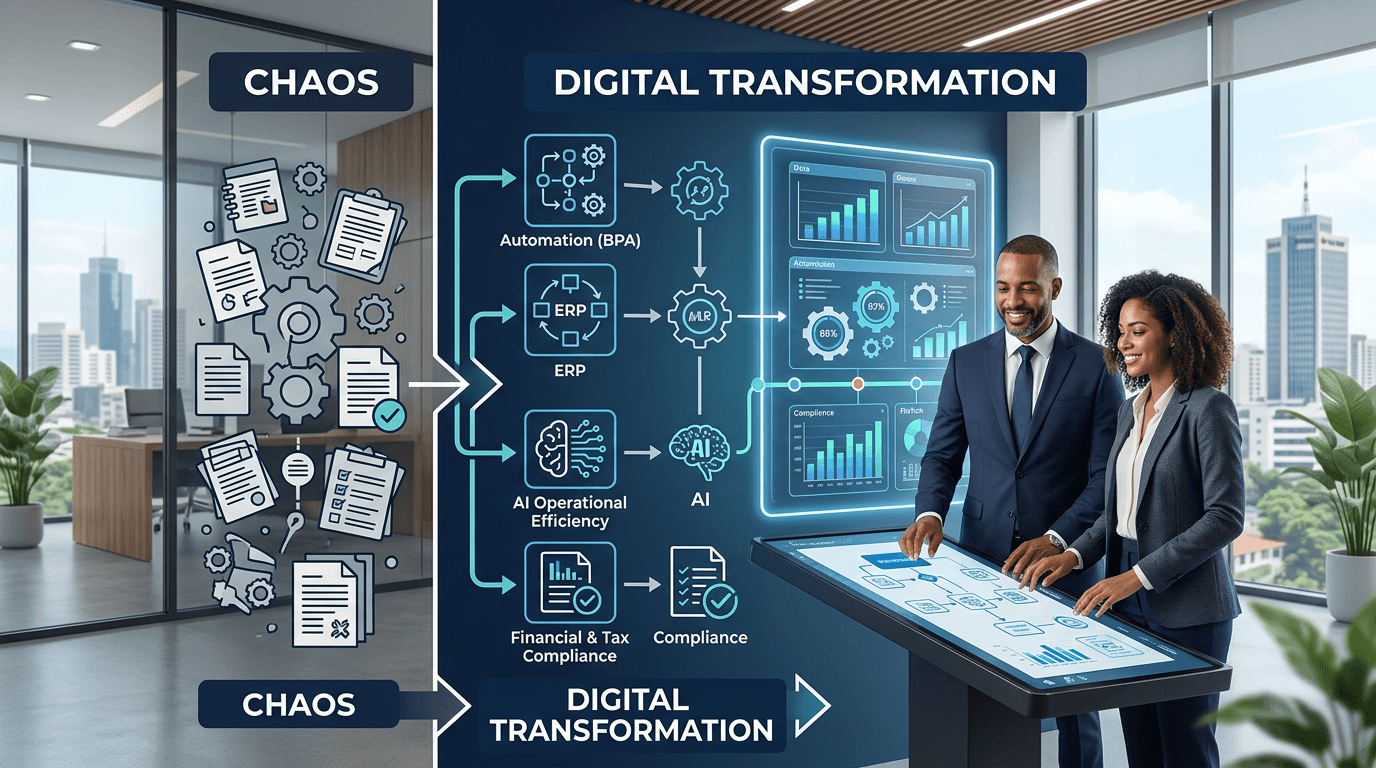
Transformación Digital en República Dominicana: Por Dónde Empezar sin Caos
Guía estratégica para empresas dominicanas: cómo iniciar tu transformación digital, automatizar procesos y escalar sin caos con soluciones tecnológicas a medida.